Planning a marketing campaign includes a creative strategy to smoothen out the process. What makes this process essential? Does every business have to create one? Here in this article, we'll take a closer look into this creative process.
Businesses create an advertisement to reach more people and convert them into buyers. However, some marketing campaigns are launched with half-baked plans, leading to unfruitful results. Consequently, they may find their campaigns a waste of money and effort. These concerns make it crucial to have proper planning first - in the form of a creative strategy.

Why Is Creative Strategy Important?
The blueprint of your marketing is crucial to your campaign's success. Especially if it's a paid ad campaign - you want to gain from it and generate a considerable return from your investment.
When you come up with a creative strategy, you direct the look and feel of your marketing activity. Every element of your promotional material will make sense. It's about adding value to your marketing campaign instead of an advertisement people can easily dismiss.
Audiences can look right into your marketing if it's well-thought-out. With a creative strategy, you connect with your audience rather than putting out a blatant promotion.
Implementing a marketing plan with properly defined goals, audiences, and other essential factors helps achieve a sustainable ROI for a business. The marketing activity you carry out will benefit the growth of your brand. How do you come up with a creative strategy? Let's discover more.
What Are the Components of Creative Strategy?
A creative strategy has essential components that make it a significant part of marketing. Without these, you'll likely produce promotional material that's not convincing enough.
With that, what should you include when preparing your strategy?
An Overall Objective
What's the rationale behind your marketing? Do you want to inform the audience about a promotion? A rebrand, perhaps? Identify the goal of your marketing first.
It's easier to set the direction of your marketing if you associate a well-defined objective. You're not promoting your business for the sake of advertising alone. What you're doing is adding value to what people consume as advertisement content. It even contributes to success - 376% of marketers set goals to achieve better results for their campaigns.
Defined Target Market or Audience
While most businesses want to promote their brand to more people, it's still best to pick a specific audience. Identify which group of people you want to see your ad or benefit from the marketing.
Targeting the mass market is not always the best way to capture prospects. It may even be counterintuitive. Your marketing message might confuse your audience if it's not intended for them. However, by targeting a specific set of people and interests, you gain better results for your promotional efforts. On the other hand, if you still don't feel comfortable doing this, working with an SMS marketing service provider can help get a lot of tasks off of your shoulders.
Expectations
Indicate the promise of your product. In this stage, you show how people can benefit from your product. Your target audience needs to understand what value they can gain from the product or service you're promoting. 68% of B2B marketing respondents, for instance, cite that they prefer vendors to organize their content according to the pain or issue that it attempts to solve.
One thing to remember in setting expectations is doing it briefly and concisely. There's only a limited time window to catch people's attention, so it's best to summarize what they can expect from your offer.
Unique Selling Proposition
What makes your business stand out from your competitors? Do you offer something unique that's only available in your product? Highlight these crucial features in making a creative strategy and understands which generates the most revenue. Salesforce and Google Analytics integration can help you track your marketing efforts effectiveness.
The selling proposition you present has to be something new to your audience. When you do differentiation, you attain better success for your marketing, as Theodore Levitt emphasized in a Harvard Business Review piece. Differentiate your offer from your competitors - be it the price, quality, or a feature found nowhere else other than in your business.
Support
People can become doubtful about advertising claims and unsolicited promotions. Build up the promise you make on your marketing campaign. You can do this by adding supporting facts and figures relevant to your offer.
These supporting statements establish further how credible your business is to the people. Cite information that will endorse your brand. Examples can be testimonials, key statistics, and any affirmation that will work to your benefit.
Tone and Presentation
The finishing touches to a creative strategy. How do you want to execute your marketing? Make it relevant to your brand and your target audience.
Find a way to make your marketing materials more appealing. Execute them in such a way that you charm your audiences into viewing what you're promoting. The tone can include an appropriate choice of words. And when it comes to representation, choosing a suitable format and visual direction.
What Is a Creative Strategy Example?
It may seem like a lot of work to have another set of strategies while building up your campaign. However, they provide inherent benefits, as seen in these examples from two large companies.
For Kit Kat and Samsung, careful planning through a creative strategy enabled them to produce an effective campaign. Let's examine their creative execution and how it generated attention towards their brand.
Kit Kat
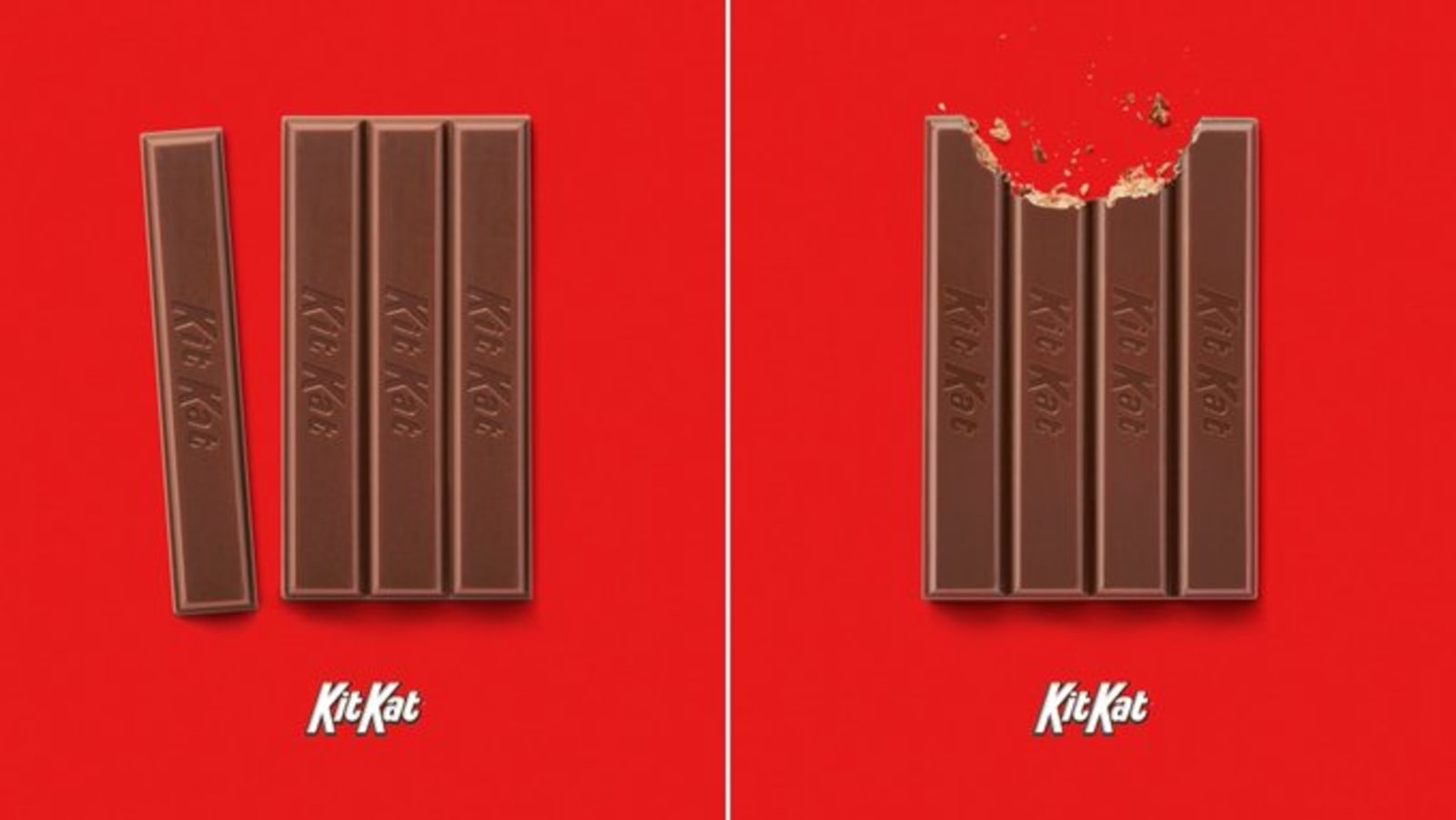
Kit Kat came up with a clever "have a bite" campaign on how to consume its chocolate product. They went for a conversation starter: how does one bite a Kit Kat?
The recognized act of biting a piece of their chocolate product stimulates a debate as the company publicly acknowledged how other people enjoy a Kit Kat. Recognizing the role of viral marketing, Kit Kat joined in on the conversation.
From a simple posting of a bitten chocolate, netizens also bit this hook. Here's how Kit Kat did it:
- Objective: To address the chocolate bite issue
- Audience: Fans of their chocolate product
- Expectation: People will have dividing thoughts on how to bite
- USP: The slicing method before taking a bite
- Support: Picture and general perception
- Tone: In a fun, trivial, and engaging manner
Samsung

Samsung's watch the happiness campaign is another outstanding example of a creative strategy. On one of their billboard ads in Turkey, Samsung masterfully crafted a smiley emoticon using elements of an otherwise ordinary TV-watching scene.
The curved OLED TV product from Samsung takes a subtle spotlight. Their execution emphasizes the happiness experienced in a symbolic layout. It's a striking design that attracts people to notice the billboard ad.
Massively displayed on a major thoroughfare, Samsung took its watch the happiness campaign to the streets incorporating these critical elements:
- Objective: Introduce its curved OLED TV
- Audience: Families and home audiences
- Expectation: A TV that buyers will enjoy watching
- USP: Curved design and OLED technology
- Support: A happy photographed setting
- Tone: Resourceful presentation using the curved TV shape
Both KitKat and Samsung are considered large companies already. However, their strategic plan to market their products applies even to smaller businesses.
How Do You Develop a Creative Strategy?
Developing a creative strategy involves the key participants of your marketing plan. If you have a third-party agency handling your marketing activities, you need to incorporate them into your planning. See to it that involved parties are engaged in the brainstorming activity.
As a business owner, you have to think about the input of marketers and the firm that will create the marketing campaign. Assess the ad campaign from every angle on how you can infuse more creativity. Creative firms such as Delesign incorporate a well-rounded approach to producing marketing visuals. Thus, allowing you to have ad material that's effective for your campaign.
For a creative strategy to be built accordingly, you'll need to consider every aspect of your campaign. As mentioned earlier, these factors include the goal, target market, selling proposition, the tone of presentation, among others. These elements are the building blocks to developing a sound strategy for your promotional material.
When you incorporate these elements, your marketing will be more effective. It will be easier to turn your marketing into one that converts people.

Raffy is involved in SEO and digital marketing. He gravitates towards upcoming technologies, startups, and is an avid learner.