The Call
April 2020. The world had just stopped.
I was seven years into what looked like a perfectly good career at Deloitte. Video calls had replaced conference rooms. Uncertainty was everywhere. And somewhere in that chaos, my phone rang.
It was my brother Sherul, along with our cousin. They had an idea.
"There's a design company we're looking at. It's called Delesign. We think we should buy it."
I'd be lying if I said I immediately jumped at the opportunity. This was peak COVID. Nobody knew what was happening next week, let alone next year. The smart move was to keep your head down, hold onto your stable job, and wait for things to blow over.
But something about that moment—the forced pause, the questioning, the sudden clarity that comes when normal disappears—made me actually listen.
"Tell me more," I said.
The Realization I'd Been Avoiding
Here's what I hadn't admitted to myself until that call: I wasn't happy.
Don't misunderstand me. Deloitte was great. I learned an enormous amount. I worked with smart people on complex problems. By every conventional measure, I was succeeding.
But when I forced myself to be honest, I couldn't name a single person whose life I'd meaningfully changed. I was helping large corporations become slightly more efficient. The work disappeared into quarterly reports and boardroom presentations. It was important in an abstract way, but it wasn't real to me.
The truth is, I'd wanted to run my own business since university. I just never knew what business, or when to start, or how to take that first step. So I did what a lot of people do: I took the corporate path and told myself I'd figure out entrepreneurship later.
COVID didn't give me ambition. It gave me urgency.
Why Delesign Made Perfect Sense
When Sherul and our cousin explained Delesign to me, they weren't just pitching a design company. They were identifying a massive problem that thousands of businesses face every day.
According to us, there are five core components to any successful business:
- The product itself ✓
- Finance ✓
- Management ✓
- Marketing ✗ (requires specialized skills)
- Technology ✗ (requires technical expertise)
Most businesses can handle the first three. But marketing and tech? That's where they get stuck. They're technical domains that require real expertise, and most small companies can't afford full teams for both.
Our vision with NexaSky, the parent company, was to create exactly that capability: world-class marketing and tech support that small and mid-sized businesses could actually afford.
And here's why Delesign fit perfectly: 9 out of 10 times, anything you do in marketing requires a creative element.
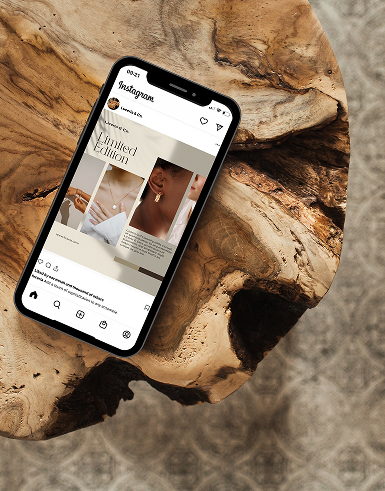
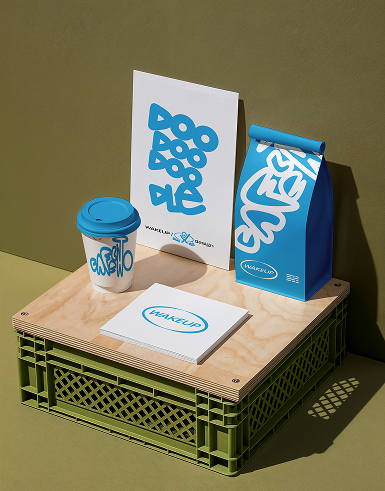
Social media posts. Ad campaigns. Landing pages. Packaging. You can have the best marketing strategy in the world, but if you can't execute it with professional creative work, you're dead in the water.
Delesign was the foundational piece that would let us help businesses actually execute their marketing. I loved the concept. I loved what we could build.
The opportunity had come at exactly the right time.
The Leap (And Why It Had to Be All-In)
I'm going to be honest: I tried to hedge my bets at first. For a few months, I attempted to keep my Deloitte job while working on Delesign on the side.
I was wrong.
You cannot build something meaningful while one foot is still in your old life. It doesn't work logistically, but more importantly, it doesn't work mentally. You're never fully committed. You're always holding back, keeping your safety net in place.
When I finally left Deloitte completely, everything changed. Not because I suddenly worked harder, but because I was finally all in. There was no backup plan. It was just us, the business, and the decision to figure it out.
And honestly? The fear of leaving corporate was worse than the reality of entrepreneurship.
Yes, it's uncertain. Yes, you have to figure things out as you go. But you also discover you're capable of far more than you thought. You see the impact of your work in ways that are immediate and tangible.
My advice to anyone in a corporate job wondering if they should take the leap: Just do it. Because until you jump directly into it and give it your entire energy and effort, you're not going to see the results you're hoping for.
Why Doing This Together Works
People ask what it's like working with family. Here's the truth: it's the best decision we could have made.
Sherul and I come from completely different worlds professionally:
Sherul: Entrepreneurship from day one. Grew up in our dad's diamond trading business. Comfortable with chaos. Moves fast. Takes risks.
Me: Seven years at Deloitte. Corporate structure. Process-driven. Everything needed planning, forecasting, approval. I need numbers and systems.
On paper, we shouldn't work together. But in reality? We complement each other perfectly.
When we're making decisions, Sherul pushes for speed and boldness. I push for sustainability and structure. When he wants to move fast, I make sure we're not breaking things. When I'm over-analyzing, he reminds me we need to actually do something.
And here's what really matters: we trust each other completely. No office politics. No hidden agendas. We're brothers. We want what's best for each other, which means we want what's best for the business.
That foundation of trust makes everything else possible.
Taking Over a Team We'd Never Met
One of our biggest early challenges: we were taking over a team of more than 50 people working remotely in the Philippines, and we'd never met a single one of them.
The team didn't know who we were. They didn't know our vision. They had no reason to trust us yet. And honestly, we were still figuring out how to run a design service ourselves.
So we flew to the Philippines.
Sherul and I spent weeks there, meeting every single person on the team. We did team activities. We had one-on-one conversations. We shared our vision and why we believed in what they were building.
But more importantly, we listened. We learned how they worked, what challenges they faced, what they needed from us as leaders.
That trip transformed everything. The trust we built during those weeks became the foundation for everything we've accomplished since. Today, that team isn't just executing designs—they're bought into the mission.
You can't build a great company with people who don't believe in what you're doing. That trip was one of the best investments we've ever made.
What Actually Drives Us
Three years in, the wins that matter most aren't the ones you'd expect.
Yes, we've grown to serve over 1,400 teams. Yes, we're profitable and scaling.
But you know what actually excites me?
Getting a message from a client saying: "We just launched our biggest campaign ever, and your designer made it possible. We couldn't have afforded this quality any other way."
Seeing a product on a shelf that we helped design the packaging for.
Watching a small startup land their first major client because they finally had professional marketing materials that made them look legitimate.
These are tangible results. Real businesses. Real people.
This is what I was missing in the corporate world. Direct, visible, immediate impact.
Every day, we get testimonials from clients who tell us we're making their lives easier, helping them compete with bigger companies, giving them access to quality they thought they couldn't afford.
That's what drives us. Not the metrics. The mission.
The AI Opportunity
We'd be naïve not to address it: AI is disrupting the design industry.
Some people see this as an existential threat. We see it as an opportunity.
Here's the reality: AI doesn't replace designers, It amplifies them.
Can AI generate designs that look "pretty good"? Sure. But taking something from "AI-generated" to "production-ready professional"? That requires human expertise, strategic thinking, and taste.
AI-assisted design is the future. And we're building for it.
Our designers use AI to generate initial concepts, create variations, speed up repetitive tasks. But the strategy, refinement and brand consistency is all human.
And honestly, this makes our service better. Our designers can produce even more in those two hours per day, which means clients get more value for the same investment.
The businesses that will win aren't the ones that resist AI. They're the ones that figure out how to use it to deliver better results. That's exactly what we're doing.
To Anyone On the Fence
If you're reading this from a corporate job, wondering if you should take the leap:
You'll never feel ready. There will never be a perfect time. But the upside is bigger than you can imagine.
I spent years telling myself I wanted to run my own business "someday." COVID forced my hand. And I'm grateful it did.
Because I've learned more in three years at Delesign than I learned in seven at Deloitte. I've had more direct impact on real people's lives. I've built something tangible that solves real problems.
And I wake up every day knowing that what I'm doing matters.
Not because it looks good on a resume. Not because it's prestigious. But because I can literally point to businesses that are succeeding in part because of what we built.
That feeling? It's worth the risk.
The Brother Factor
I'll end with this: people often ask what it's like building a business with my brother.
The answer is simple: I wouldn't want to do it any other way.
Building a company is hard. There are moments when you're questioning everything, when the easy choice would be to give up.
Having Sherul as a partner means I'm not just accountable to a co-founder—I'm accountable to my brother. We're not just building a business together. We're building a legacy together.
When we disagree, we work through it. When one of us is struggling, the other steps up. When we win, we celebrate together.
That foundation of family, trust, and shared purpose? It's our unfair advantage.
And honestly, I can't imagine doing this journey with anyone else.